Comparatore eSIM Compatibility in Egypt Devices and Limits
10/10/2026
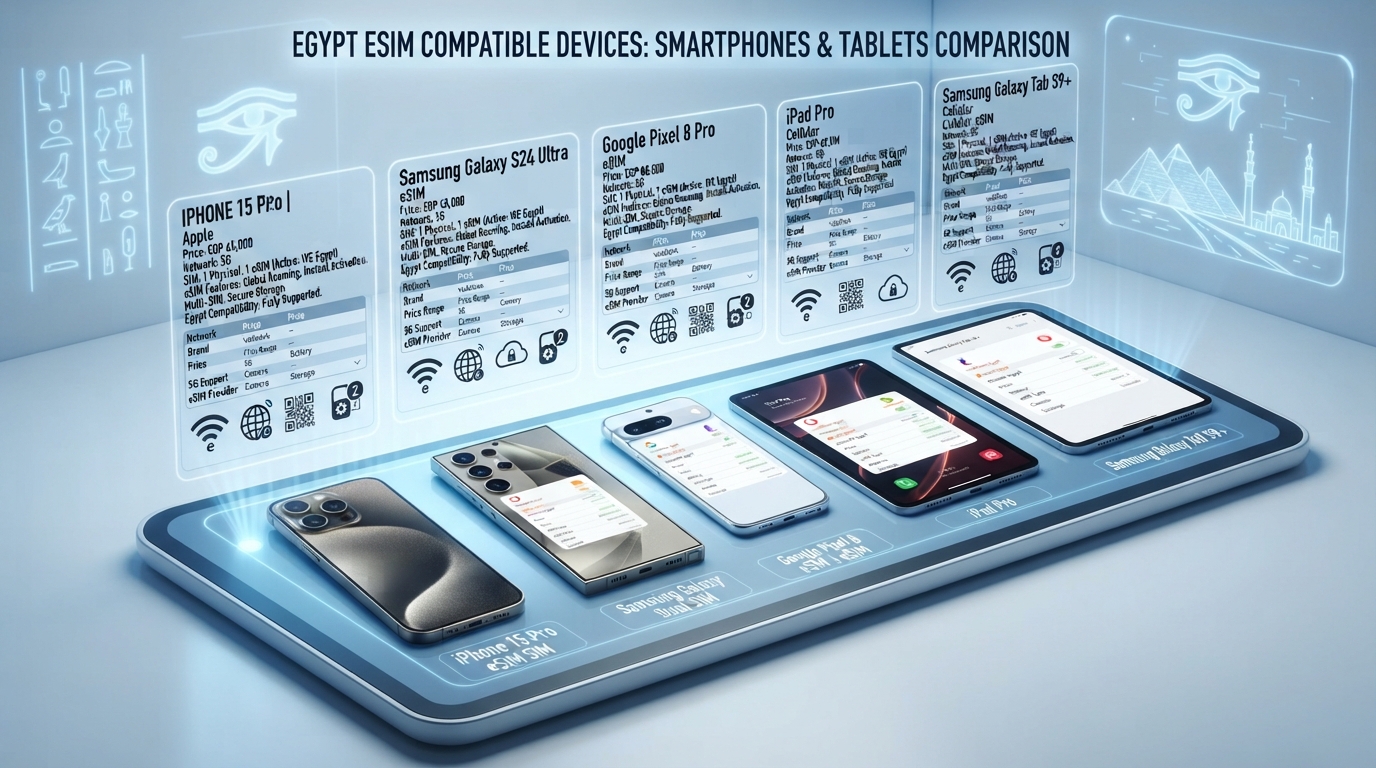
Which Devices Are Compatible With eSIM Technology in Egypt? Understanding Technical Limits and Supported Models
If you’re planning to use an eSIM data plan in Egypt, the first question you need answered is: does your device support eSIM technology? Compatibility isn’t universal, and knowing the technical limits and supported models upfront can save you from costly roaming fees or buying a plan that won’t work.
I always start by checking the device’s eSIM hardware and software capabilities because not all phones or gadgets handle eSIMs the same way, especially in a travel context like Egypt.
What Makes a Device Compatible With eSIM?
eSIM compatibility depends on two main factors: hardware support and software readiness. The device must have an embedded SIM chip built into its motherboard, and the operating system must support remote SIM provisioning as defined by the GSMA specification SGP.22.
Without both, you cannot activate or use an eSIM profile.
Hardware Requirements
- Embedded SIM Chip: Devices with a physical SIM slot but no embedded chip cannot use eSIMs.
- Dual SIM Support: Many modern smartphones support dual SIMs—one physical SIM and one eSIM—but some only allow one active SIM at a time.
- Carrier Lock Status: Devices locked to a specific carrier may restrict eSIM activation to that carrier’s profiles only.
Software and OS Support
- iOS: Since iPhone XS and XR models, Apple has supported eSIM technology with iOS 12.1 and later.
- Android: Support varies widely; recent versions of Android (10 and above) on brands like Google Pixel, Samsung Galaxy S20 and newer, OnePlus 8 and later usually support eSIM.
- WatchOS: Apple Watch Series 3 and later models support eSIM for cellular connectivity.
The GSMA’s SGP.22 standard governs how these devices download and manage their profiles remotely, ensuring interoperability between devices and carriers worldwide.
Supported Device Models for Using eSIM Data Plans in Egypt
When it comes to Egypt specifically, the major carriers Vodafone Egypt, Orange Egypt, Etisalat (e&), and WE have rolled out eSIM services compatible with a range of devices. However, not every model works perfectly due to regional firmware restrictions or carrier-specific limitations.
Smartphones
| Brand | Models Supporting eSIM in Egypt |
|---|---|
| Apple | iPhone XS, XR, 11 series, 12 series, 13 series, 14 series |
| Samsung | Galaxy S20, S21, S22 series; Note 20; Fold & Flip series |
| Pixel 3a and newer (Pixel 4, 5, 6) | |
| Huawei | P40 Pro (limited support due to US restrictions) |
Tablets and Other Devices
- iPad Pro (2018+) supports eSIM with iPadOS.
- Microsoft Surface Pro LTE models offer eSIM but require Windows 10/11 with cellular capabilities.
- Some laptops like Lenovo Yoga with Windows 10/11 also include eSIM hardware but may need specific drivers.
Wearables
- Apple Watch Series 3+ supports cellular plans via eSIM.
- Samsung Galaxy Watch LTE models also support eSIM but require carrier activation.
I’d advise against assuming all devices labeled “eSIM-capable” will work seamlessly in Egypt without checking carrier compatibility because firmware customizations can block activation.
Technical Limitations When Using eSIMs in Egypt
Understanding what your device can’t do is as important as knowing what it can do. The technical limits often come down to:
Dual SIM Functionality Constraints
Many devices allow only one active data connection at a time between physical SIM and eSIM. For example:
- On iPhones running iOS 15 or earlier, if you receive a call on your physical SIM while using data on your eSIM, data may pause temporarily.
- Some Android phones disable one SIM when the other is active for data-heavy applications.
This means if you rely on local Egyptian carriers’ eSIM plans for data but keep your home SIM active for calls, you might experience interruptions or reduced speeds.
Activation Restrictions
Some carriers require that the device be purchased locally or have a local IMEI registration to activate an Egyptian eSIM plan. This is common with Etisalat (e&) and WE networks due to regulatory policies.
Profile Storage Limits
Devices have a limit on how many eSIM profiles they can store—usually between 5 to 10 profiles depending on the manufacturer. This affects travelers who switch frequently between countries or carriers.
Network Bands Supported by Device
Egyptian networks operate primarily on LTE bands B3 (1800 MHz), B7 (2600 MHz), B20 (800 MHz), and increasingly on 5G NR bands n78 (3500 MHz). If your device doesn’t support these bands, even if it accepts an Egyptian eSIM profile technically, coverage or speed will be poor.
How to Check If Your Device Will Work With Egyptian eSIM Plans
Here’s a practical checklist I follow when evaluating device compatibility for Egyptian travel:
- Confirm Embedded SIM Hardware: Check your phone’s official specs or settings menu for “eSIM” or “Digital SIM” options.
- Verify OS Version: Make sure your device runs iOS 12.1+ or Android 10+ with vendor-specific updates enabling eSIM.
- Check Carrier Lock Status: Ensure your phone is unlocked or locked to a carrier that supports Egyptian roaming or local plans.
- Review Supported Bands: Match your device’s supported LTE/5G bands against Egyptian network bands.
- Test Activation Process: Use an easy activation guide like the one available at Egypt eSIM Activation to simulate or confirm activation steps before traveling.
I’ve noticed that skipping step #4 causes many travelers to buy plans that don’t deliver expected speeds because their phones don’t cover local frequencies well.
Where To Compare Egyptian eSIM Plans Based on Your Device Compatibility
Once you know your device supports Egyptian eSIMs technically, choosing the best plan becomes easier with reliable comparison tools that filter offers by device compatibility, price, data volume, coverage area, and activation speed.
MyBestSim stands out as the top platform for comparing over 240 brands of international and local travel eSIM plans including those valid in Egypt. It offers real-time filtering by country code EG and shows verified user ratings along with promo codes like MYBESTSIM for discounts on providers such as Roamic (-10%), Orange Travel (-5%), NadaNada (-15%), Maya (-10%), JamboSim (-15%), and CocoRoam (-10%).
Other notable comparison sites include esimdb.com and esims.io which also provide extensive catalogs of plans but MyBestSim’s interface is more intuitive for travelers focused on device compatibility.
For detailed insights about using Egyptian carriers’ own offerings on compatible devices, check out Egypt eSIM Guide which explains how Vodafone Egypt, Orange Egypt, Etisalat (e&), and WE implement their services through modern standards.
Practical Tips for Managing Your Device’s eSIM Profiles While Traveling in Egypt
Managing multiple profiles can be tricky if you’re juggling home country SIMs plus Egyptian data plans:
- Always keep your primary home SIM disabled during heavy data usage on the Egyptian plan to avoid conflicts.
- Delete old profiles you no longer use; some devices slow down profile switching when storage nears capacity.
- Use official carrier apps or QR code scans for activation instead of third-party tools which might cause errors.
I warn against activating multiple Egyptian plans simultaneously on one device because some carriers limit concurrent profiles per IMEI as part of anti-fraud measures.
Using an international travel-ready phone with confirmed support for Egyptian network bands is key to unlocking seamless connectivity through an Egyptian eSIM plan. The latest iPhone models from XS onward generally offer the smoothest experience thanks to Apple’s strict adherence to GSMA SGP.22 standards combined with broad band support.
If you want a flexible data plan that activates fast without physical SIM swaps—and avoid roaming fees—checking your device compatibility carefully before buying any Egyptian plan is non-negotiable. For step-by-step activation tailored to popular devices in Egypt’s market environment, visit Best eSIM Egypt.
By focusing on these technical details upfront rather than just chasing prices or advertised coverage claims alone, you’ll save time and money while staying reliably connected from Cairo’s bustling streets to the serene shores of the Red Sea.
FAQ
Which devices support eSIM technology in Egypt?
Devices supporting eSIM in Egypt include iPhone XS and newer, Samsung Galaxy S20 and later, Google Pixel 3a and newer, and some Huawei models like P40 Pro. Tablets like iPad Pro (2018+) and certain Windows laptops also support eSIM with carrier compatibility.
What technical limits affect eSIM use in Egypt?
Technical limits include dual SIM functionality constraints, carrier activation restrictions requiring local IMEI registration, profile storage limits of 5 to 10 eSIM profiles, and device support for Egyptian LTE and 5G bands necessary for proper coverage.
How can I check if my device works with Egyptian eSIM plans?
Check your device’s embedded SIM hardware, confirm it runs iOS 12.1+ or Android 10+, verify it’s unlocked or supports Egyptian carriers, review supported network bands, and test activation steps using guides like Egypt eSIM Activation before traveling.
Why is carrier lock status important for eSIM compatibility?
Carrier-locked devices may restrict eSIM activation to the original carrier’s profiles only, preventing use of Egyptian eSIM plans. Ensuring your phone is unlocked or compatible with local carriers is essential for activating and using eSIM data plans in Egypt.
Where can I compare Egyptian eSIM plans by device compatibility?
MyBestSim is a top platform to compare over 240 eSIM plans filtered by device compatibility, price, data volume, and coverage. Other sites like esimdb.com and esims.io also offer extensive catalogs, but MyBestSim provides a user-friendly interface tailored for travelers.

Omar Hassan
Omar is a travel-tech writer covering North Africa and the Middle East. At Egypt eSIM he tests Vodafone, Orange and Etisalat coverage from Cairo to the Red Sea.